What a Young Middle Blocker Should Work On
Tall kids get sent to the middle, then spend a season feeling a step behind. Here's what the position asks of a 12 to 15 year old, and the footwork and timing habits we build first in our gyms.
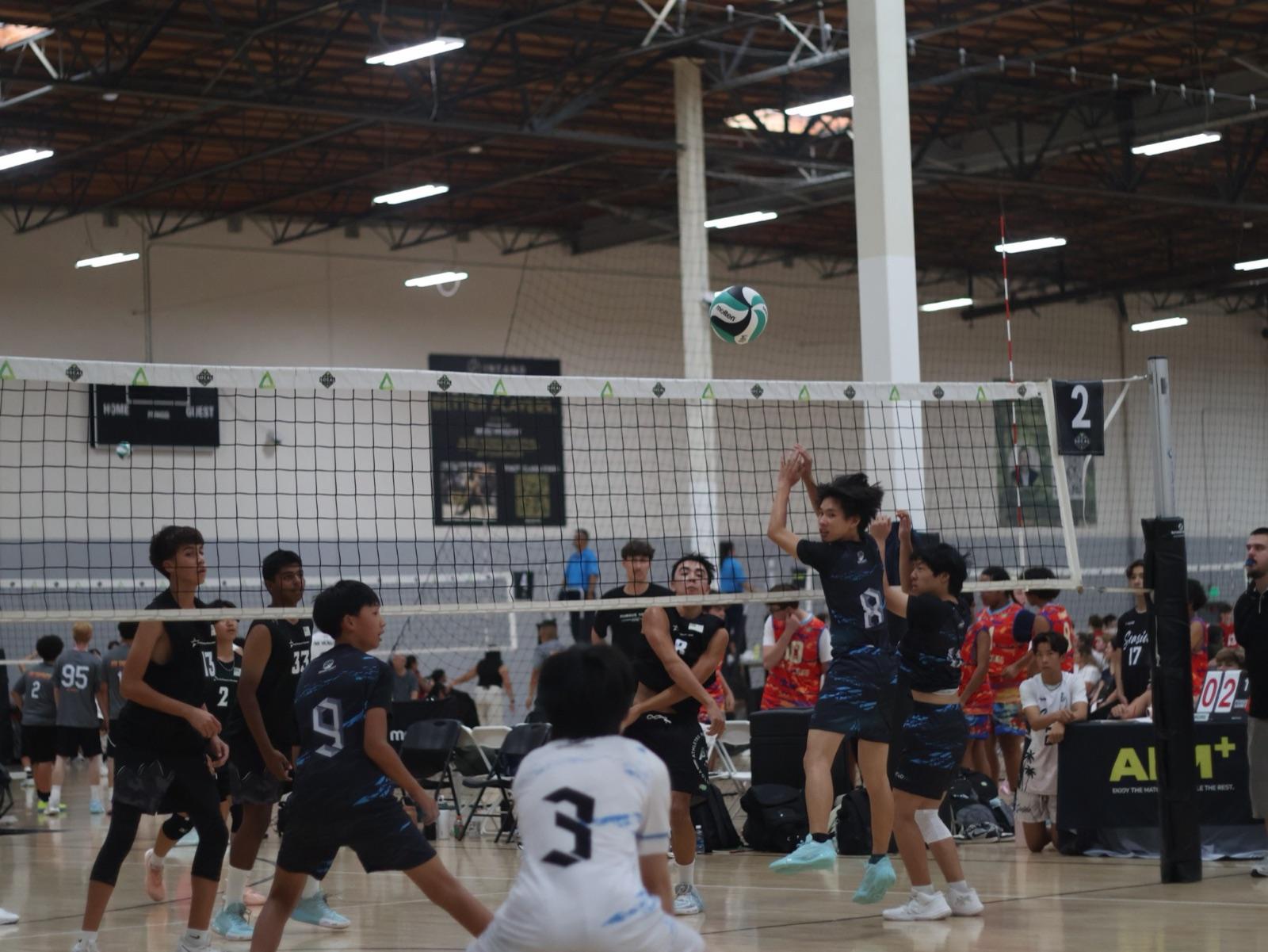
Somebody grew four inches over the summer. Now the coach has moved them to the middle, and after the first few practices your player comes home saying they never touch the ball.
That's normal. The middle is the busiest position on the court that gets the fewest highlights. A middle blocker might jump on every single rally and finish a set without a kill. They're still doing the job.
We coach a lot of new middles on weekends. Most of them are tall, a bit unsure of their feet, and convinced they're bad at it. Give them a couple of months.
Feet first, again
Height gets a kid sent to the middle. Footwork keeps them there.
A middle has to get from the center of the net to either antenna in time to put up a block next to the outside blocker. At 12U and 14U the court feels enormous when you're the one covering it. Kids who try to run there sideways with their shoulders turned end up jumping late and drifting into the net.
We teach two patterns. For a short move, a quick shuffle step, staying square to the net. For a longer one, a crossover: turn the hips, take a big step across, plant, and square up before you jump. The plant matters more than the speed. A middle who arrives a little late but goes straight up will block more balls than one who gets there first and floats sideways.
We drill this with no ball at all. A coach points left or right and the middle has to move, plant and jump with hands over the net. Then back to the center. Ten of those and the legs are burning. It's the least glamorous five minutes of any session, and it's what separates the middles who improve from the ones who don't.
Pressing over the net
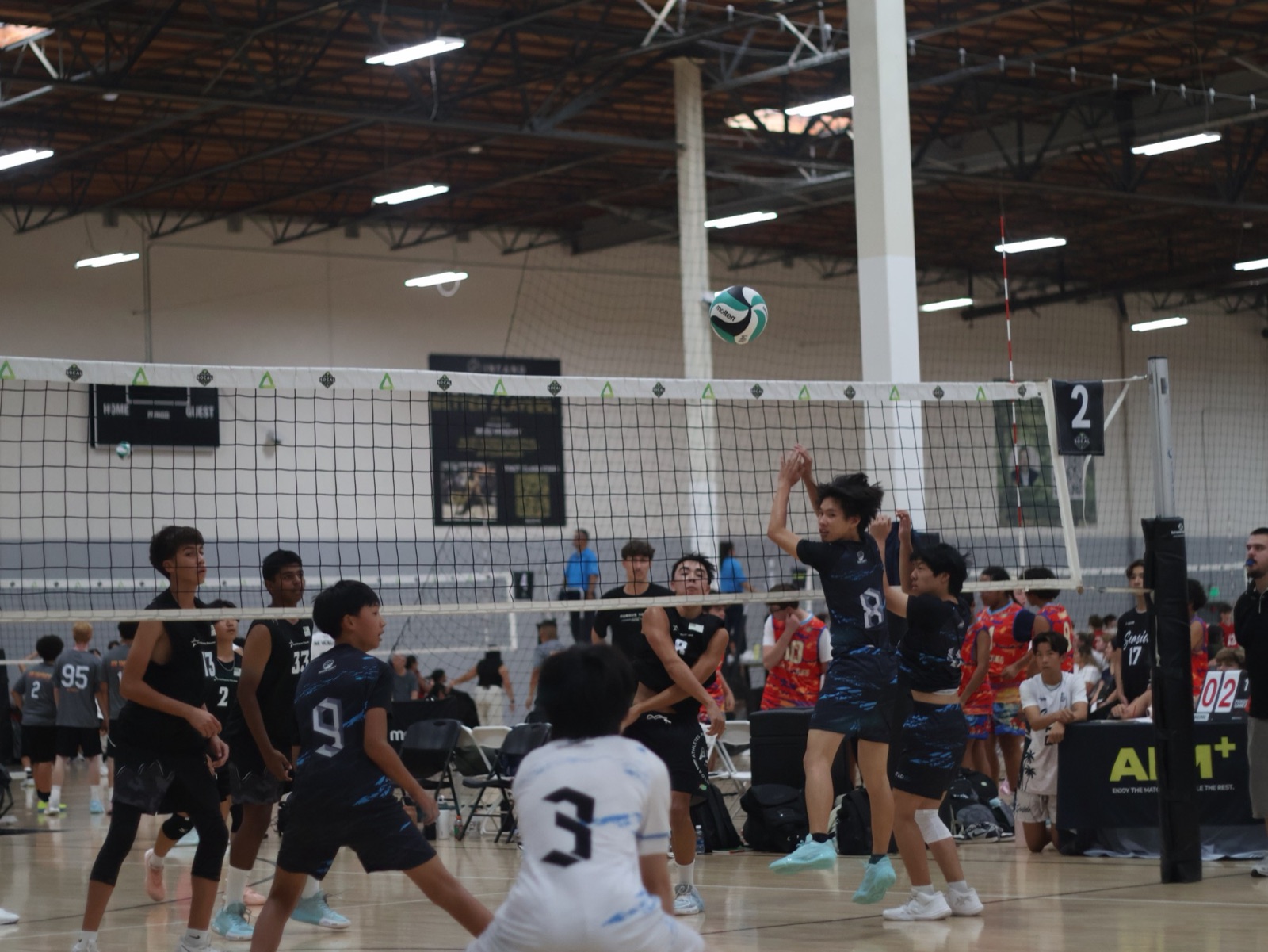 A good block seals the net. Hands press over to the other side and the gap between the blockers stays closed.
Young middles tend to jump and throw their arms straight up in the air. The ball hits their fingers and goes out of bounds, or slides down between them and the net.
We want the hands pushed forward over the net as early as the player can get them there, fingers spread wide and arms locked firm. Think of reaching into the other team's side and grabbing the space above their hitter. The hands should finish angled a little toward the middle of the opponent's court, so a ball off the block goes back down on their side.
Kids are scared of touching the net at first. That's fine. Better to start a few inches off it and work closer than to keep getting whistled.
Watching the right things
This is where new middles struggle most, and it takes the longest to fix.
A beginner watches the ball. That makes sense, but it means they react to the set after it's already gone. A middle who improves starts reading the other team's setter. Which way are their hips facing, and is the ball coming off their hands in front of the forehead or behind it?
We ask our middles to follow a simple order. Watch the pass, watch the setter, find the hitter, then jump. Out loud at first. "Pass, setter, hitter, go." It feels silly. It also stops them guessing.
Nobody reads the setter perfectly at 13. We're happy if a middle can tell a set going to the outside from one going behind the setter early enough to take one step in the right direction.
The quick attack
Middles do hit, and when it works it's the fastest ball in the gym.
At this age the quick set to the middle is rarely clean, because young setters are still learning to put it in the same place. So we start with timing. The middle starts the approach before the setter touches the ball and is already in the air, arm back, when the ball arrives. If they wait to see the set, they're too late.
We work on this with a coach tossing instead of a setter, so the ball is the same every time. Once the timing is there, we hand it to a real setter and accept a lot of misses for a few weeks.
Transition
A middle who blocks and then stands at the net is out of the next play. After landing, they need to turn, back off the net quickly and get ready to approach again. We call it opening up. Two or three fast steps back from the net, facing the ball, so they're a hitting option if the dig is decent.
What parents can do
Be patient with the stats. A middle's best rally might be a block that slowed the ball down so the libero could dig it. Nobody claps for that, but coaches see it.
At home, jump rope helps more than you'd expect. So does any footwork that teaches them to stop cleanly and go straight up. Leave the technique corrections to the coaches.
And keep an eye on the knees after a heavy weekend. Middles jump more than anyone. If your player is sore for days or limping, take a break and see a doctor before playing through it.
Getting more reps at the net
Our weekend clinics group players by grade and level, and the Rising Stars and High Performance tracks spend time on blocking and net play. It's $42 a session, booked one date at a time, or four sessions for $119 on the Monthly Pass. If your player has just been moved to the middle, tell the coach at check-in and we'll give them extra time at the net. For one-on-one work on footwork and timing, look at private training.
Train with us
Weekend clinics, camps, club teams and private training across Orange County, ages 8 to 18.
Find a program