What a Young Setter Should Work On
Your kid just got told she's the setter. Here's what that job really asks of a 12 or 13 year old, and the habits we drill first in our gyms before anyone worries about a fancy back set.
Every season a parent pulls one of us aside after a session and says the same thing. "Coach put her at setter. She's never done it. Is that good?"
Usually, yes. Coaches tend to hand the setting job to calm kids who watch the whole court. It's a compliment. It's also the position where a beginner feels lost the fastest, because the setter touches the ball on almost every rally and everyone notices when the second contact goes wrong.
Getting there early
Most bad sets are late sets. The ball comes off the pass, the setter is still drifting toward the net, and she ends up reaching for it with her body twisted. Parents see the hands. Look at the feet first.
The first habit is simple to describe and hard to build. The moment the ball crosses the net on the other side, the setter is moving to her spot near the net, a little right of the middle. She gets there, stops, and turns to face the passer. Her right foot is slightly ahead. Shoulders square to the left side of the court, which is where most of her sets will go at this age.
We run this without a ball for a while. A coach tosses to a passer, the setter has to arrive and be still before the pass is made. If she's still moving when the ball arrives, the rep doesn't count. Kids find this boring for about five minutes and then they start racing each other.
The hands
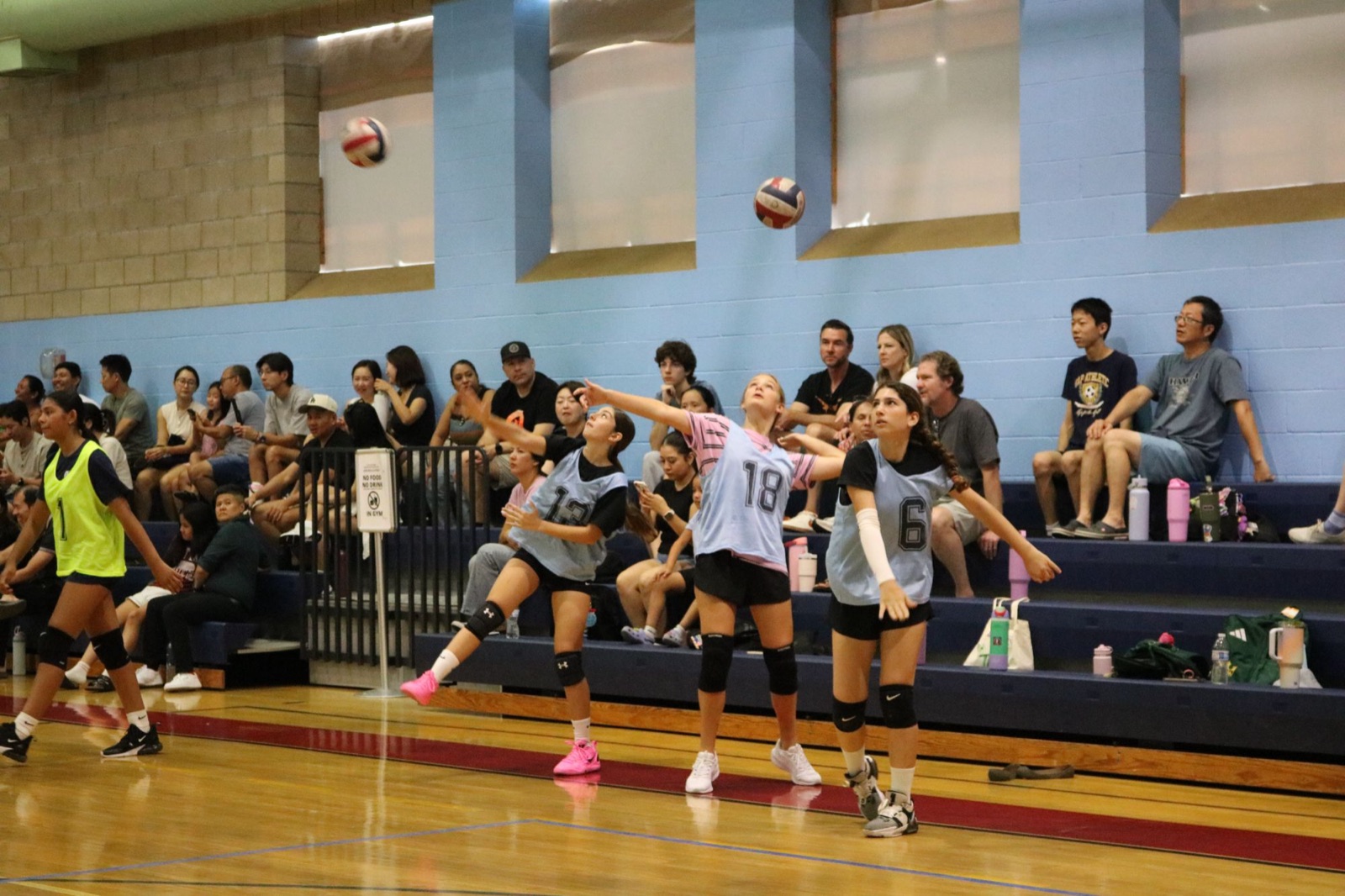 A setter is only as good as the pass she gets, so she should be in these drills too.
Once she's getting there on time, we look at her hands.
The ball should meet her hands above her forehead, a few inches out. Thumbs and first fingers form a loose window she can see the ball through. Fingers spread wide. Wrists bent back so the hands are cupped like she's about to catch something heavy.
Then the part that takes months. The ball should come off both hands at the same time and leave quickly. A slow, double-tapped release is the most common fault call in youth matches, and young setters get called for it constantly. We tell kids to think of the ball as hot. It comes in, the elbows and knees bend a little to absorb it, and it pushes back out using legs as much as arms.
A great home drill is setting to yourself against a wall from two or three feet away. Quick and soft, using both hands. Count how many in a row. Twenty is a solid start. A hundred means she's been practicing.
Height before speed
Young setters often try to copy the quick, flat sets they see in college matches. Don't let them yet.
A 12U outside hitter needs time. She needs to see the ball, start her approach and get her feet under her. A high, consistent set to the left antenna gives her that. If the setter can put it in the same spot, at the same height, ten times in a row, the hitters will start to trust her. At this age that trust is the whole game.
We have setters aim for a target just inside the antenna and about a meter off the net. It sounds dull. It wins a lot of matches.
Setting the bad pass
Real passes aren't perfect. Plenty of them will be low and way off to one side. A young setter has to learn that her job doesn't stop when the pass is ugly.
If she can't get her hands under it cleanly, a forearm set is fine. Bump it high to the outside and let the hitter do something with it. A pretty hand set that gets whistled for a double helps nobody. Give the hitter a ball she can swing at.
We also want her talking. "Mine" early and loud, so the other five players know she's taking the second ball. If she can't get to it, she calls a teammate's name or yells "help" so the right back or libero steps in. Quiet setters cause collisions.
Thinking ahead
This part takes years.
Before the serve, she should know which hitters are in the front row and who's having a good day. During the rally, she's glancing at the other team's blockers. If the middle blocker over there is leaning hard toward our outside, the setter might push the ball to the right side instead.
At 12 or 13, we don't expect much of this. But we ask setters questions between drills. Who's hot right now? Where was their block? Getting them to say the answer out loud builds the habit faster than any lecture.
What parents can do
Leave the technique to the coaches. Seriously. There are a dozen small hand and foot details, and different coaches teach them slightly differently, so a well-meaning tip at dinner can muddle what she heard at practice.
What helps is reps. Wall sets, a few minutes a day. Setting to a sibling in the backyard. Throwing her a ball and asking her to put it high and in the same spot each time.
And let her be imperfect in front of you. Setters get called for doubles. They set a ball into the net now and then. If she knows you're not wincing every time, she'll play looser, and loose hands set better.
Where to get the reps
Every one of our weekend clinics splits players by grade and level, and coaches rotate kids through setting so everyone gets touches at the net. Sessions are $42 each, booked a date at a time, or four for $119 on the Monthly Pass. If your player has been put at setter on her school or club team and wants extra work on it, tell the coach at check-in. We'll make sure she spends time at the net.
Train with us
Weekend clinics, camps, club teams and private training across Orange County, ages 8 to 18.
Find a program