Volleyball Positions Explained for Parents
Setter, outside, middle, opposite, libero. What each one does, who tends to end up there, and why your kid's position at 12 says very little about where she'll be at 16.
If you've sat through a club match without knowing the positions, you've probably wondered why one kid in a different colored jersey never seems to hit the ball over the net, and why the tall kid keeps rotating off the court. Here's the short version, written for the bleachers.
Setter
The quarterback. The setter takes the second touch on nearly every play and decides who gets to attack. Good setters are calm, have fast hands, and can see the whole court while the ball is in the air. They're also often the smartest player on the floor, because the job is mostly decisions.
Setters don't need to be tall. They do need to want the ball when everything's going wrong.
Outside hitter
Attacks from the left side of the net and usually takes the most swings on the team. Outsides also pass in serve receive, so they have to be good at two very different skills. This is the position most young players want, because it's where the highlights are. It's also the most crowded at tryouts.
Middle blocker
The tall one. Middles block at the net on defense and hit quick sets on offense, which means they're moving on almost every play. Middles get the least glory and do the most running. They're also the position where a late growth spurt can change a kid's whole trajectory at 15.
Opposite
Plays the right side of the net, across from the setter. Opposites hit a lot, block the other team's outside hitter, and are often the team's strongest server. Left-handed kids tend to find a home here because the angle of the set suits them.
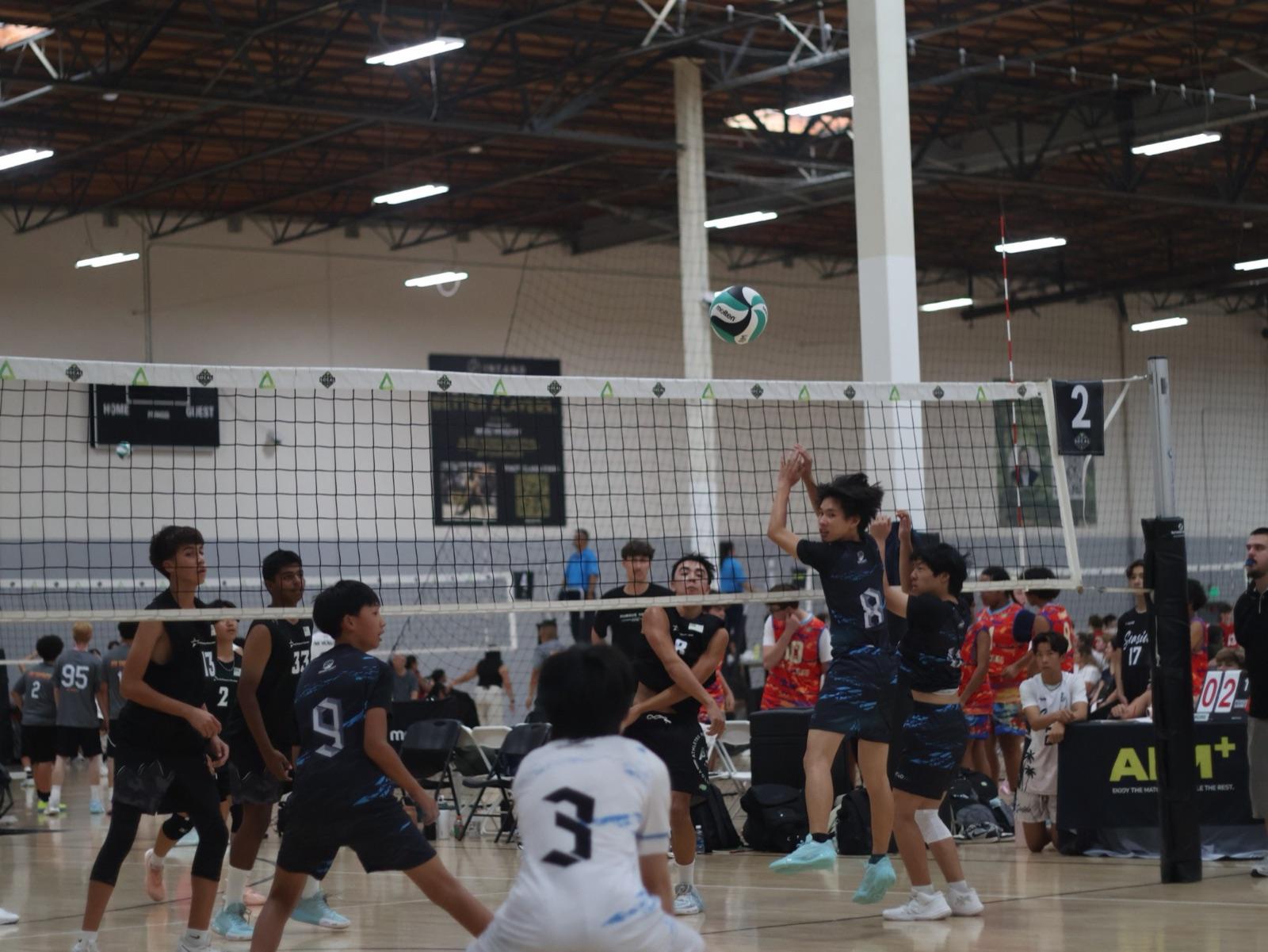
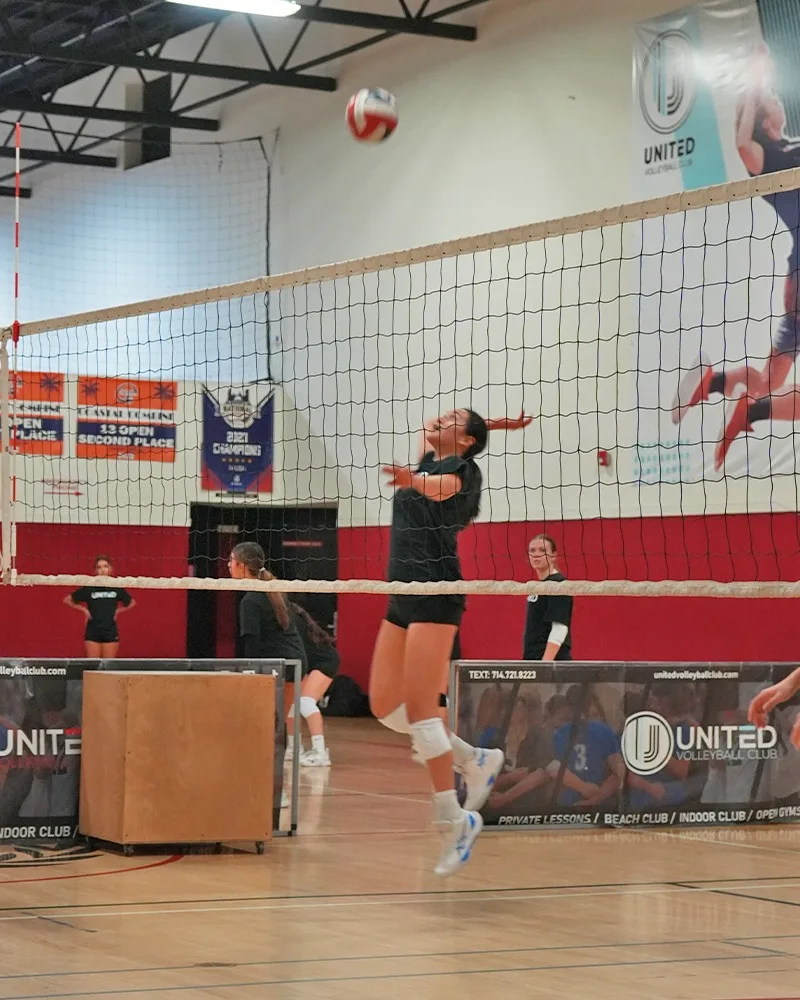 The swing everybody wants. The approach footwork behind it is what we teach.
Libero
The one in the different jersey. The libero is a defensive specialist who plays only in the back row, passes most of the serves, and can sub in and out without counting against the team's substitutions. Liberos can't attack above the net, which is why that kid never spikes. Liberos are usually the best passer on the team and often the toughest. Shorter athletes with quick feet thrive here.
Defensive specialist
Like a libero, but without the special jersey or the free substitutions. DS players come in for weaker passers in the back row. Lots of players spend a season or two here while they develop.
How positions get decided
At 10 to 12, mostly by height and by what the kid's been practicing. At 13 to 14, coaches start to see where the instincts are. A kid who always wants the second ball gets tried at setter. A kid who dives for everything gets tried at libero. By 15 to 16, bodies have mostly finished changing and positions settle.
What this means for you: don't let your 12 year old lock into one position, and don't let a coach do it either. We train every player at every position in our youth programs until at least 13, and we'd argue it's the single best thing a developing player can do. The setter who can also pass is harder to take out of the game. The outside who understands blocking reads the other team better.
When specializing makes sense
Around 14, if the kid is heading toward club or high school varsity. Even then, a private lesson or two on a second position is cheap insurance. Rosters change. The team that needs a libero in March doesn't care that your daughter was an outside in November.
If you want a coach's view on where your kid fits right now, bring her to a weekend clinic. We rotate players through every spot during the scrimmage portion and you'll see it for yourself. Dates are on the weekend clinics page.
Train with us
Weekend clinics, camps, club teams and private training across Orange County, ages 8 to 18.
Find a program