Underhand or Overhand Serve? When a Young Player Should Switch
Your 10 or 11 year old still serves underhand and wonders if that's holding her back. When to make the jump to overhand, what the switch looks like in practice, and why the toss matters more than arm strength.
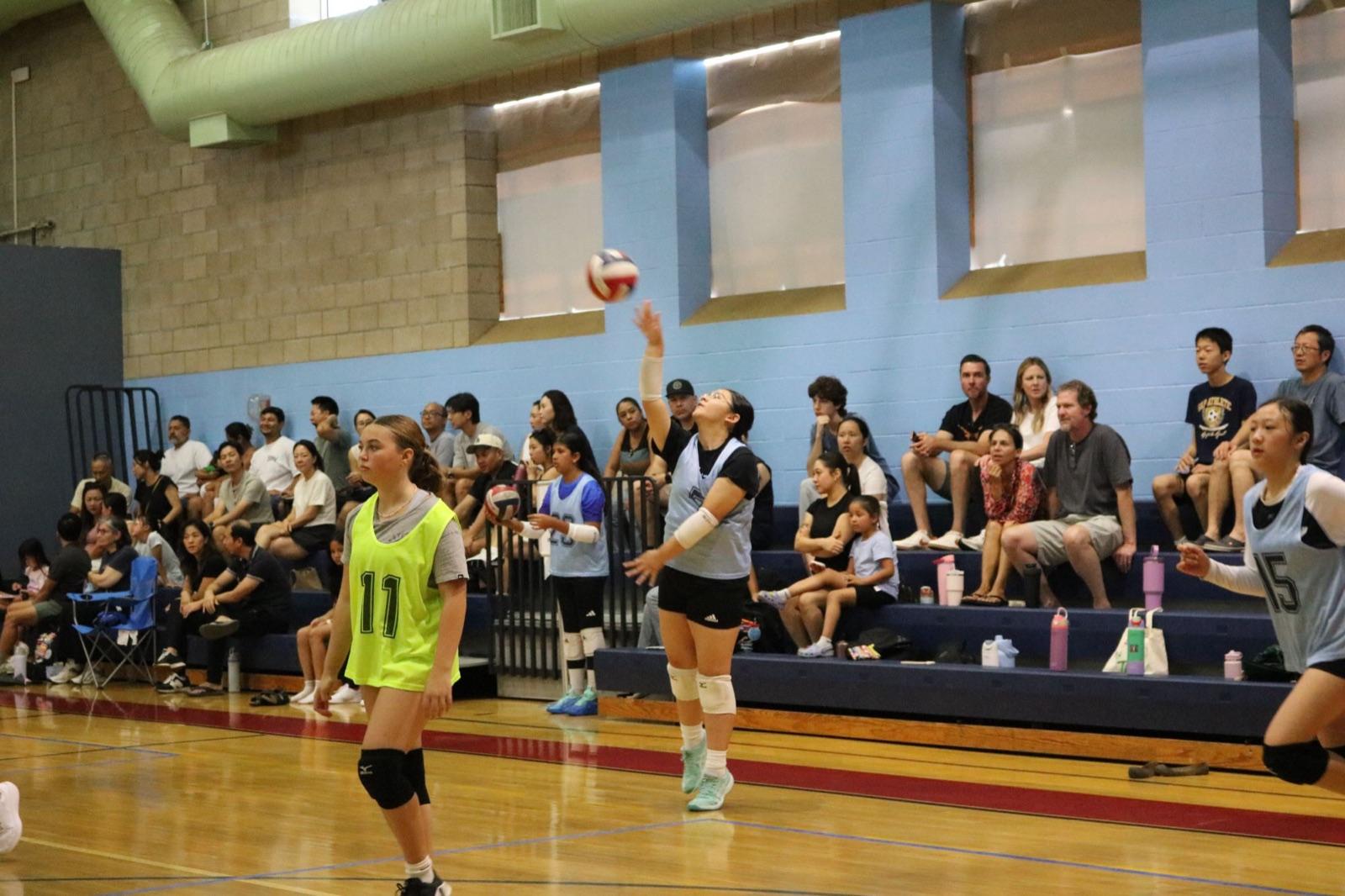
A lot of the kids who walk into our beginner sessions have one season of rec or city ball behind them. Ask them to serve and most of them drop the right hand low and swing it up from the hip. Underhand. It goes over, more or less, and that's how they won games last spring.
Then they look across the gym. An older girl is tossing the ball up and hitting it overhand, and suddenly the underhand serve feels babyish. A parent catches us at the end of the session and asks the obvious thing. Should she be serving overhand by now?
Here's how we think about it.
An underhand serve that goes in is worth more than an overhand one that doesn't
Every point in a youth match starts with a serve. If the serve lands in the net, the other team gets the point and your kid's team never got to play the rally. At ten or eleven, a lot of matches go to whichever side misses fewer serves.
So we never rush a kid off a serve she can put in the court. If she's getting eight or nine out of ten over the net underhand, she's helping her team. We'll still start teaching the overhand, but she keeps the underhand in her pocket for games until the new one is reliable.
When we start teaching overhand
Age isn't the trigger. Some nine year olds are ready. Some thirteen year olds aren't, usually because nobody ever showed them.
What we look for is simpler than that. Can she throw a ball overhand, like a softball or a football, and get it some distance with her arm coming over the top? If yes, she has the motion an overhand serve is built on. If she pushes the ball from her chest when she throws, we work on throwing first, which surprises some parents until they see the serve improve with it.
The toss is the whole serve
Parents tend to watch the arm. We spend most of our time looking at the toss.
Almost every overhand serve that sails long or dives into the net started with a toss that went somewhere strange. Behind her head, or so high she had to wait for it and lost her timing. A beginner will blame her arm, swing harder, and miss worse.
We spend a lot of the first few weeks on the toss alone. One hand, no spin, a little higher than she can reach, and out in front of the hitting shoulder. Then she lets it drop and looks at where it landed. If it hits the floor in the same spot five times in a row, she's ready to swing at it. If it's landing all over the place, swinging just gives her a sixth thing to get wrong.
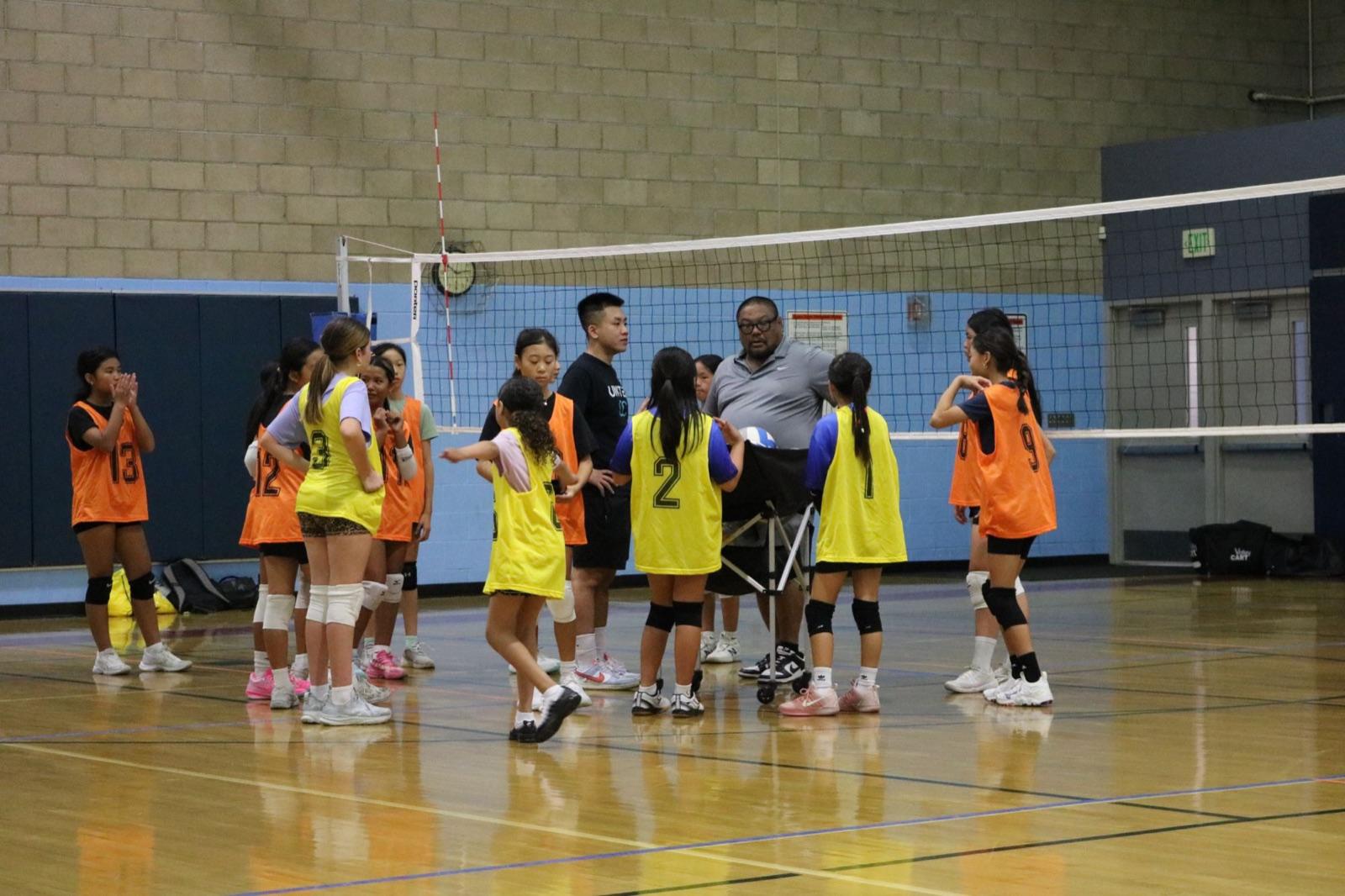
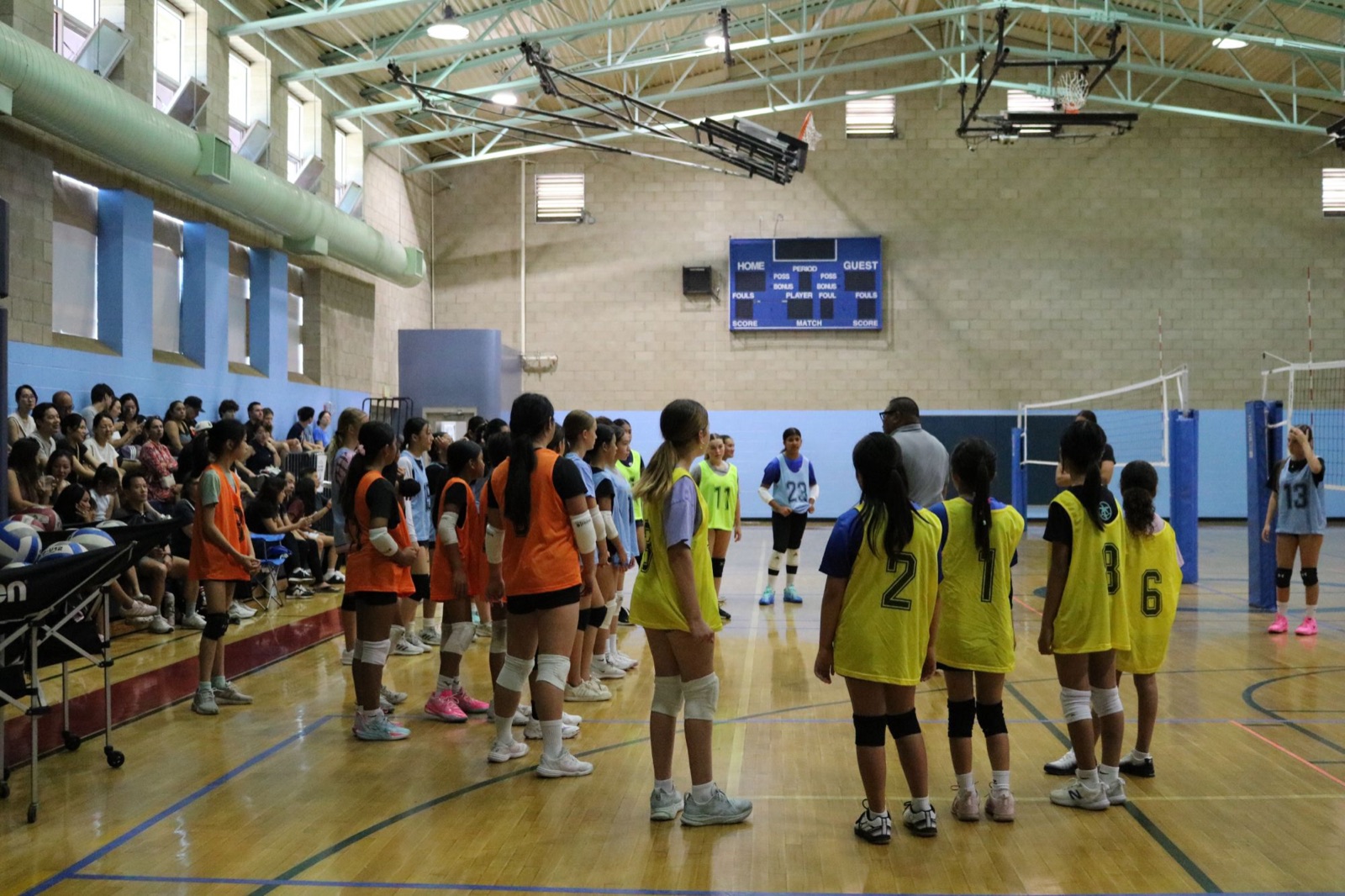 Before a serving block. Most of the coaching happens before anyone touches a ball.
What the first month of overhand looks like
It's ugly for a while, and that's fine.
We usually move a new overhand server a few steps inside the end line. Closer means she doesn't have to muscle the ball, so she can focus on contact. We want an open hand and a firm wrist, with the heel of the palm meeting the middle of the ball. Once she's getting most of them over from there, she backs up a step. Then another. Most kids reach the real end line within a few weeks.
Expect her serve percentage to drop at first. A kid who was nine for ten underhand might go four for ten overhand. Parents sometimes panic here. Don't. The underhand was never going to get much better, and the overhand has a lot of room to grow.
Games versus practice
Our rule for young players is pretty loose. Practice the new serve in practice. In a scrimmage or a real match, serve whatever goes in.
When the overhand is landing about as often as the underhand did, she switches for good. She'll usually decide that herself, because hitting an overhand serve over the net in front of her teammates feels great and she'll want to do it again.
Jump serves can wait
Every year a few kids see a jump serve on video and want to skip straight to it. We get it.
Everything a jump serve needs is built on the standing overhand, and a shaky standing serve gets shakier once she's moving. It also puts more load on shoulders and knees that are still growing. For most young players we save it until the standing overhand is automatic and her coach brings it up. If your player has any shoulder pain from serving, stop and see a doctor before she keeps going.
What you can do at home
Throwing helps more than you'd expect. Play catch with a tennis ball or a softball and let her throw overhand from farther away each week. That builds the arm path without any volleyball at all.
For the toss, she can stand in the driveway, toss a volleyball up, and let it land. Same spot every time is the goal. Ten minutes is plenty. Leave the swing to her coach.
Where to work on it
Every one of our weekend clinics has serving time built into the session, and beginners get coached on the toss from day one. Sessions are $42 each, booked a date at a time, or four for $119 on the Monthly Pass. Ages 8 to 18 train in separate tracks by grade and level, so an eleven year old learning her first overhand serve isn't stuck next to a varsity hitter.
Not sure which group fits? Send us her age and how long she's played through the contact page and we'll point you to the right session.
Train with us
Weekend clinics, camps, club teams and private training across Orange County, ages 8 to 18.
Find a program