Volleyball Drills to Do at Home Without a Net
A wall, a ball and fifteen minutes a day will do more for a young player than a second weekly practice. Here are the drills our coaches assign, with the number of reps that makes them count.
The gap between a once-a-week player and a twice-a-week player is mostly ball contact, and ball contact doesn't need a gym. It needs a wall and a kid who'll do the same boring thing for fifteen minutes. Here's what we assign, in the order we'd introduce it.
Wall passing
Stand about six feet from a wall. Toss the ball to the wall, let it come back, pass it back to the wall with forearms. Keep it going. The goal is a steady rhythm, not power. Knees bent, arms straight, contact above the wrists, and the legs doing the work.
Start at ten in a row. When ten is easy, go to twenty-five. A kid who can do fifty straight wall passes has a platform most 14U coaches would take.
Common mistake: swinging the arms. If the ball's flying over her head, she's swinging. Shrug the shoulders, lock the elbows, let the legs lift.
Setting to self
Stand still. Set the ball straight up, about two feet above the head, catch it in setting position. Do it ten times. Then set twice before catching. Then three times. Then stop catching.
Hands should be shaped like she's about to catch a ball on her forehead, fingers spread, thumbs back. The ball should make almost no sound. A loud slap means she's hitting it with her palms.
Twenty-five in a row standing still is the first goal. Then do it walking. Then do it sitting down, which fixes almost every hand-position problem there is.
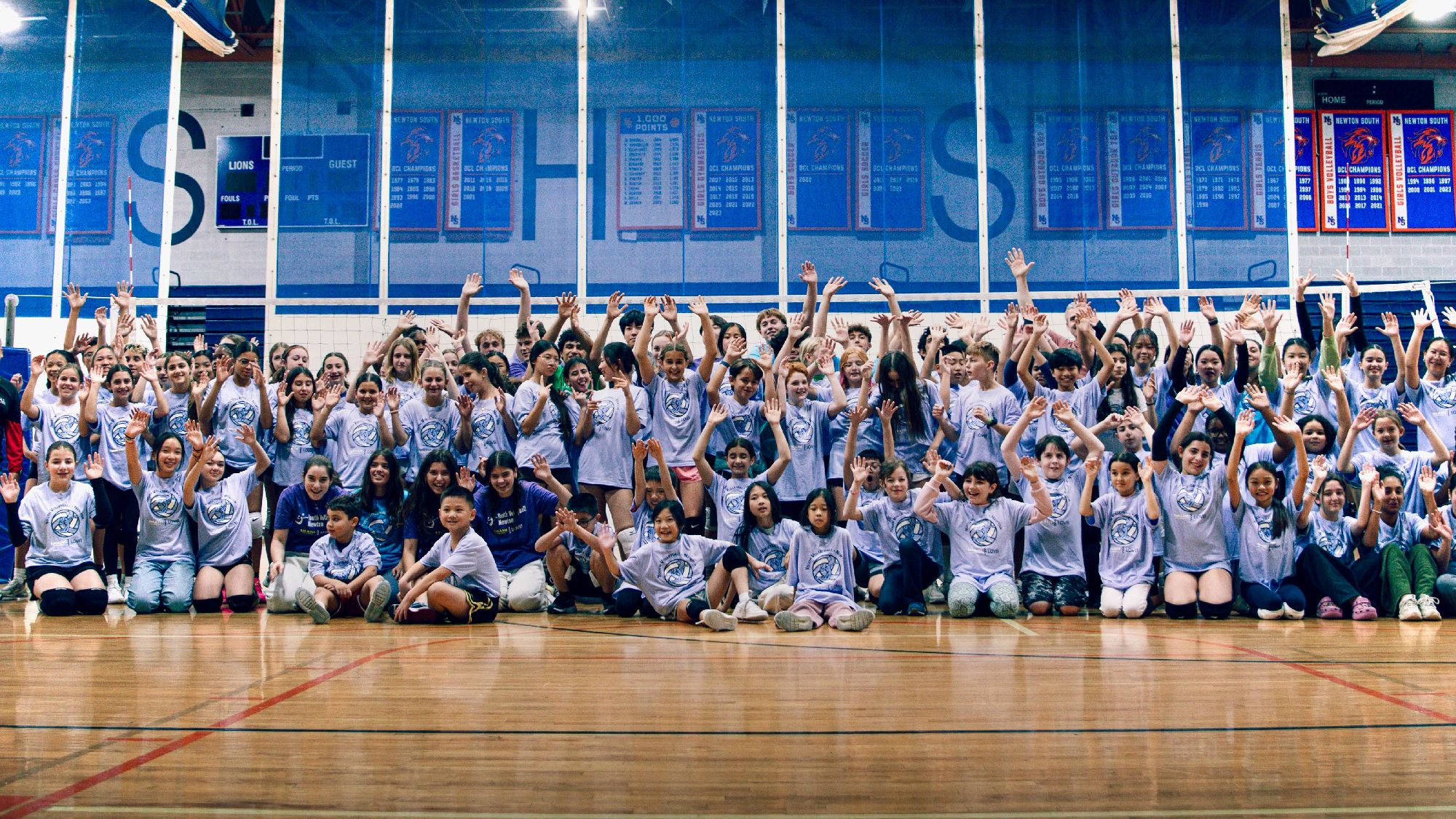 The same hand shape, a thousand times. There's no shortcut and we've looked.
The serve toss
Most bad serves are bad tosses. Practice the toss alone, with no swing, and let the ball drop. It should land about a foot in front of the hitting shoulder, every time. Mark the spot on the ground with a shoe. Fifty tosses. Nobody's ever done fifty consecutive perfect tosses on the first day, which is why it's worth doing.
Once the toss lands on the shoe nine times out of ten, add the arm swing against a fence or garage door, standing about fifteen feet back. Contact with a firm, open hand, high and in front.
Footwork without a ball
The attack approach is the hardest thing in youth volleyball to learn and the easiest to practice at home, because it needs no ball at all. For a right-hander: left, right-left, jump. The last two steps are quick and the arms swing back then up. Ten approaches in the hallway every day and it stops being something she thinks about, which is the whole point.
Jump rope
Two minutes, every day. Volleyball is hundreds of small jumps, and jump rope builds the calves and ankles that take the load. It also does more for a vertical than anything a 12 year old should be doing in a weight room.
Putting it together
Fifteen minutes. Wall passing until she's hit her streak, setting to self, twenty tosses, ten approaches, two minutes of rope. Most days. Not every day. A kid who does this four days a week will walk into her next weekend clinic noticeably sharper, and the coaches will see it in the first ten minutes.
If something in here isn't clicking, bring the question to a coach at a session or book a private aimed at that one thing. But try the wall first. The wall is undefeated.
Train with us
Weekend clinics, camps, club teams and private training across Orange County, ages 8 to 18.
Find a program