She's Done a Few Camps. What's Next for a Young Beginner?
Your 8, 9 or 10 year old has a couple of summer camps behind them and keeps asking to play. How to turn a camp kid into a regular, what changes when training goes weekly, and how to tell if they're ready.
We get some version of this email every week. A parent's daughter is nine, maybe ten. She's done two or three camps, loved every one of them, and now she's asking when she gets to play again. The parent wants to know if she's still a beginner and where she fits.
Short answer: yes, she's still a beginner, and that's fine. A few camps put a kid in a great spot. They just don't add up to the thing that makes players improve, which is regular reps spread out over months.
What a camp gives a kid
Camps are a burst. Three or five days in a row, lots of energy, new friends, a coach who's fun to be around. Kids come home tired and happy and talking about it at dinner.
What they don't usually come home with is a skill that sticks. That's no knock on camps. Motor skills settle in with spacing and repetition, and a week of volleyball followed by eleven weeks of nothing means a lot of it fades. When we see a camp kid at her first weekend clinic, she remembers the ready position and the vocabulary. Her forearm pass is usually back near square one.
So when a parent tells us their kid has "done volleyball before", we nod and start from the platform anyway. Nobody's offended. The kids who've been to camps pick it back up faster, and you can see it within twenty minutes.
Why weekly beats a big week
The jump that matters for a young player is from a few days a year to something on the calendar most weeks.
Think about how kids learn to ride a bike. Nobody learns in a single marathon afternoon. They wobble on Saturday, wobble less the next weekend, and one day it's just there. Passing a volleyball works the same way. The arms have to learn where the ball lands on them, and they learn it from hundreds of contacts on different days.
One session a week is plenty at nine. Two is fine if she's begging for it. More than that, at this age, tends to turn a hobby into a chore, and we'd rather keep her asking.
Where a 9 year old fits at OCVA
Our weekend clinics run three tracks side by side at every location. The one for this kid is Volleyball Academy, which is beginner to intermediate for grades 3 to 6. A fourth grader who's done some camps goes straight in there. You don't need an evaluation or a tryout.
Each session is $42 and you book one date at a time, so a family can try a weekend, skip the next one for a birthday party, and come back after. If it turns into a habit, the Monthly Pass covers four sessions for $119.
The older tracks aren't the next stop for a while. Rising Stars Academy is grades 7 to 12. Our coaches will tell you when a younger player is outgrowing her group, and it's usually obvious to everyone on the court before anyone says it out loud.
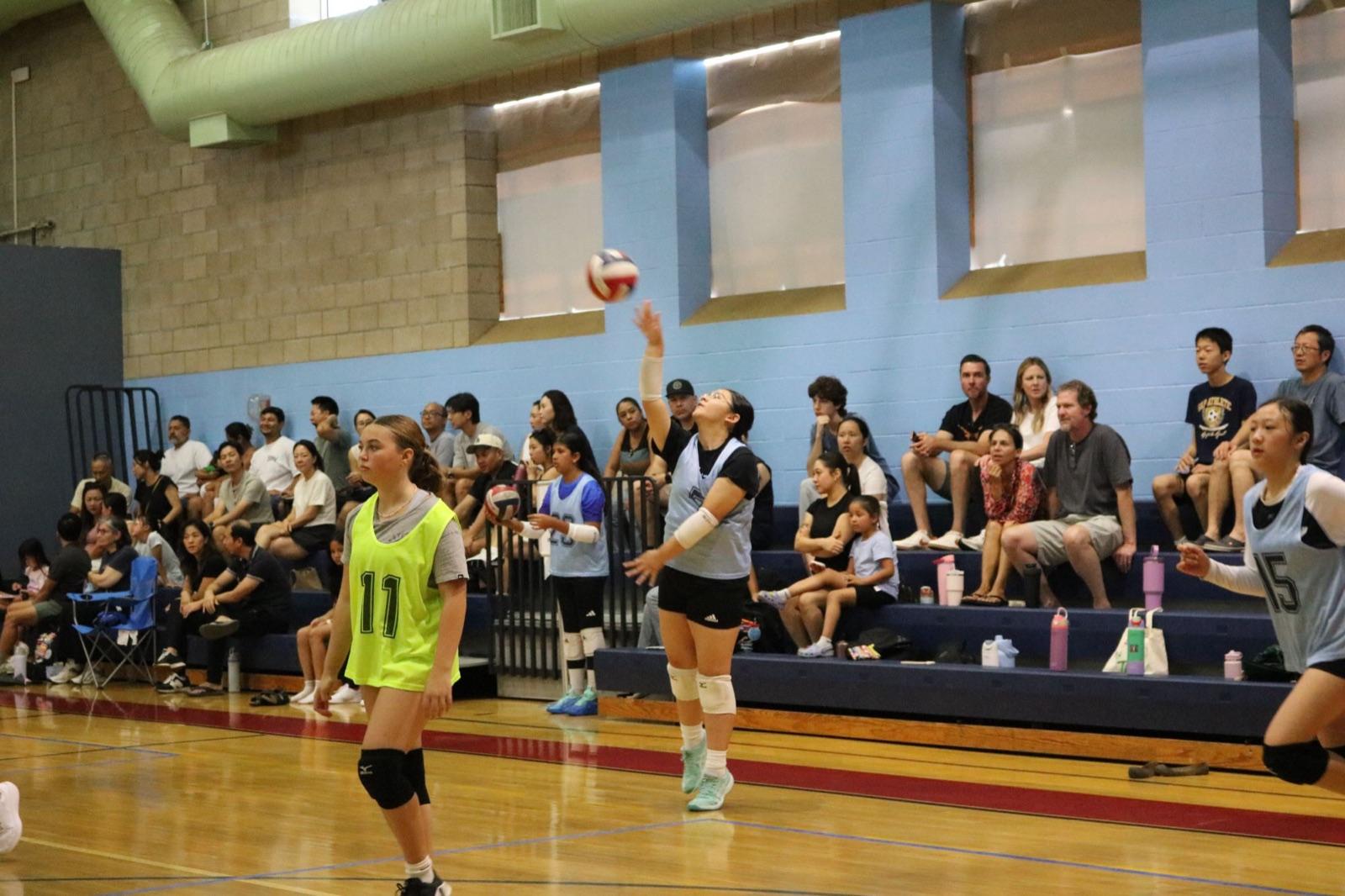
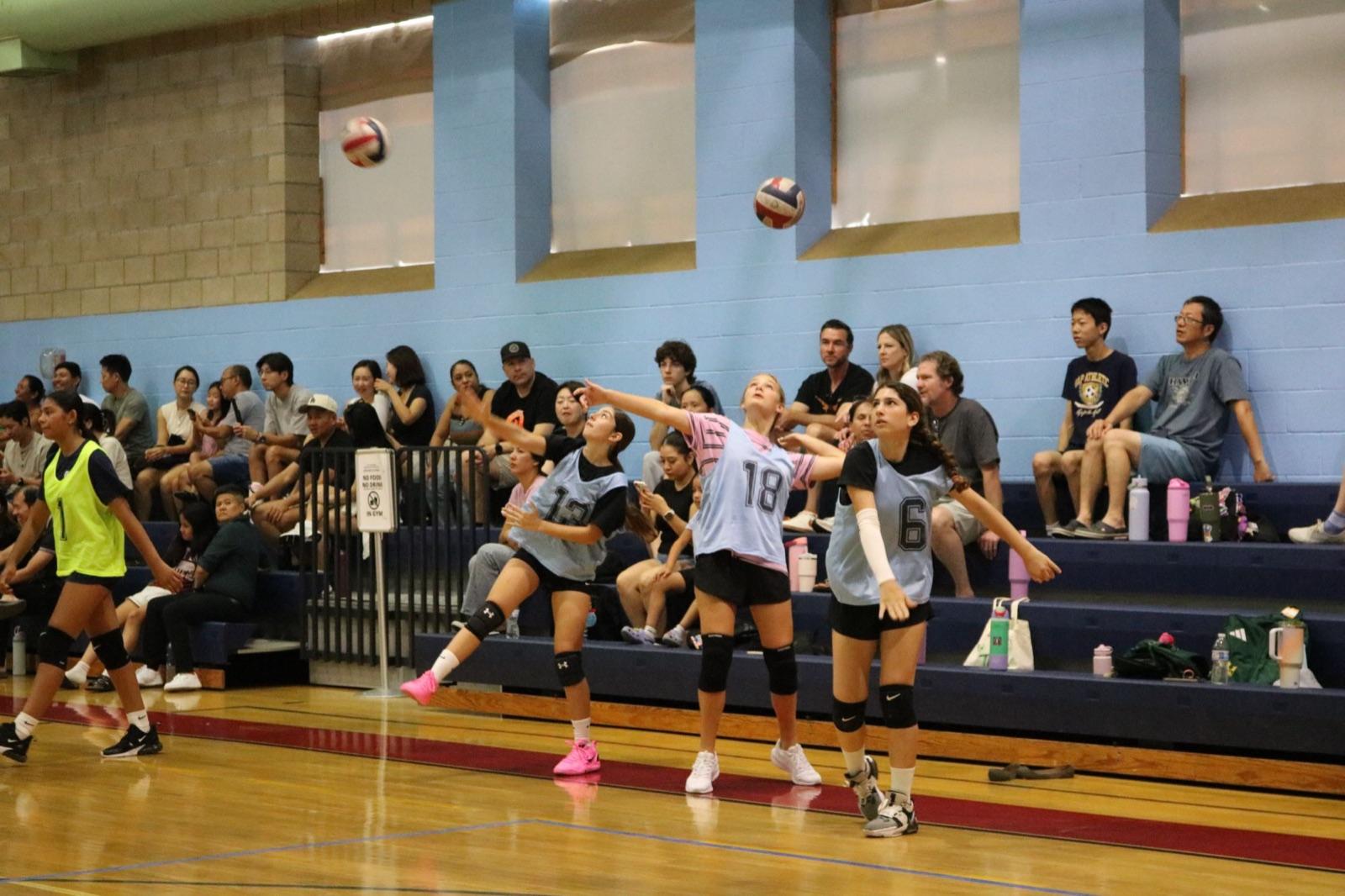
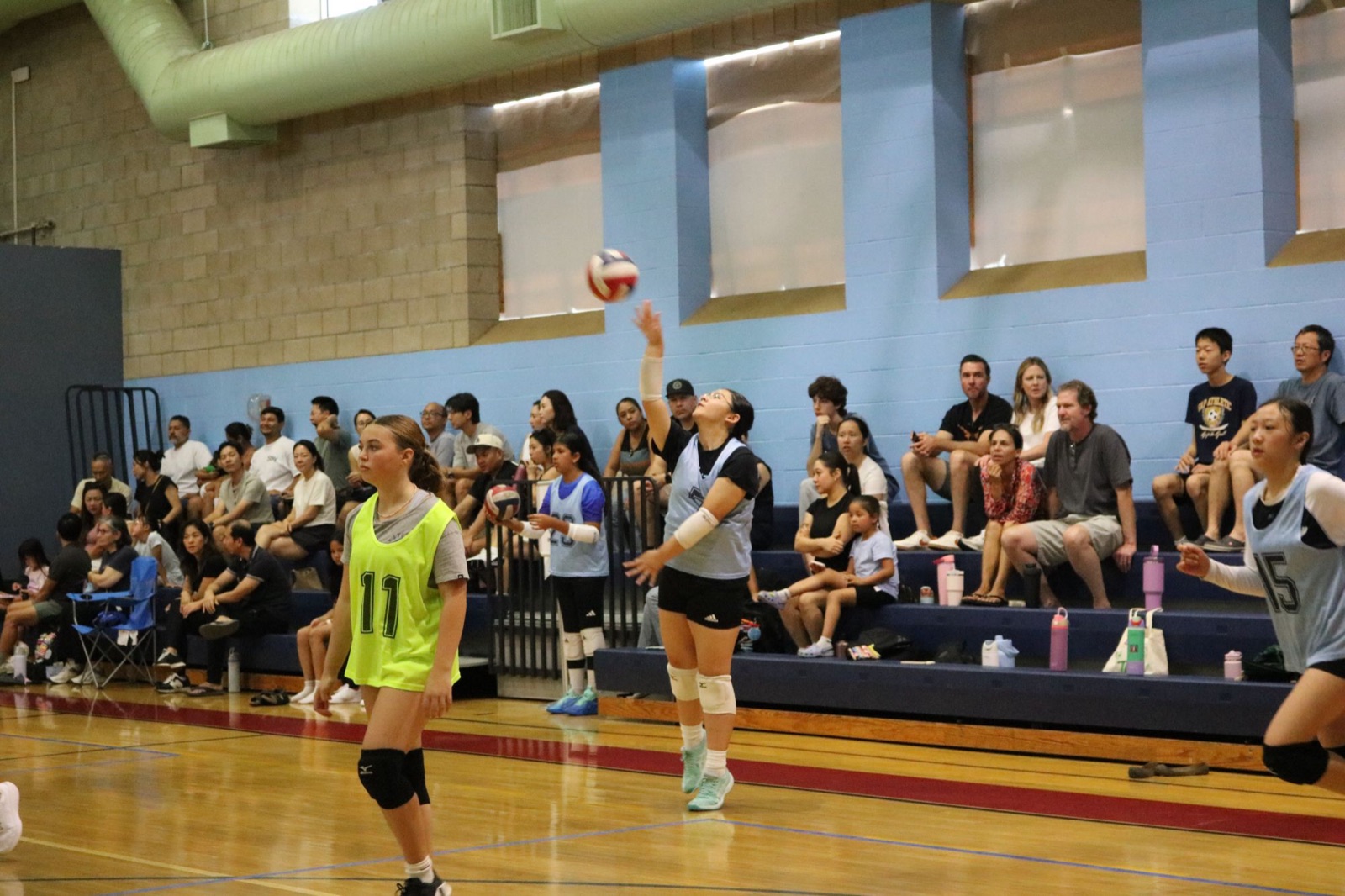 Serve practice on a Saturday. The parents in the bleachers are part of the deal.
How to tell if she's ready
Skill has very little to do with it. We look for two things in a nine year old.
Can she listen to a coach explain a drill to a group and then do it without someone walking her through it again? And is she OK being bad at something in front of kids she doesn't know yet?
If both are mostly yes, she's ready for regular training. If she's shy the first time, that's normal too. Most of the nine year olds we see are quiet for one session and loud by the third.
What the first month looks like
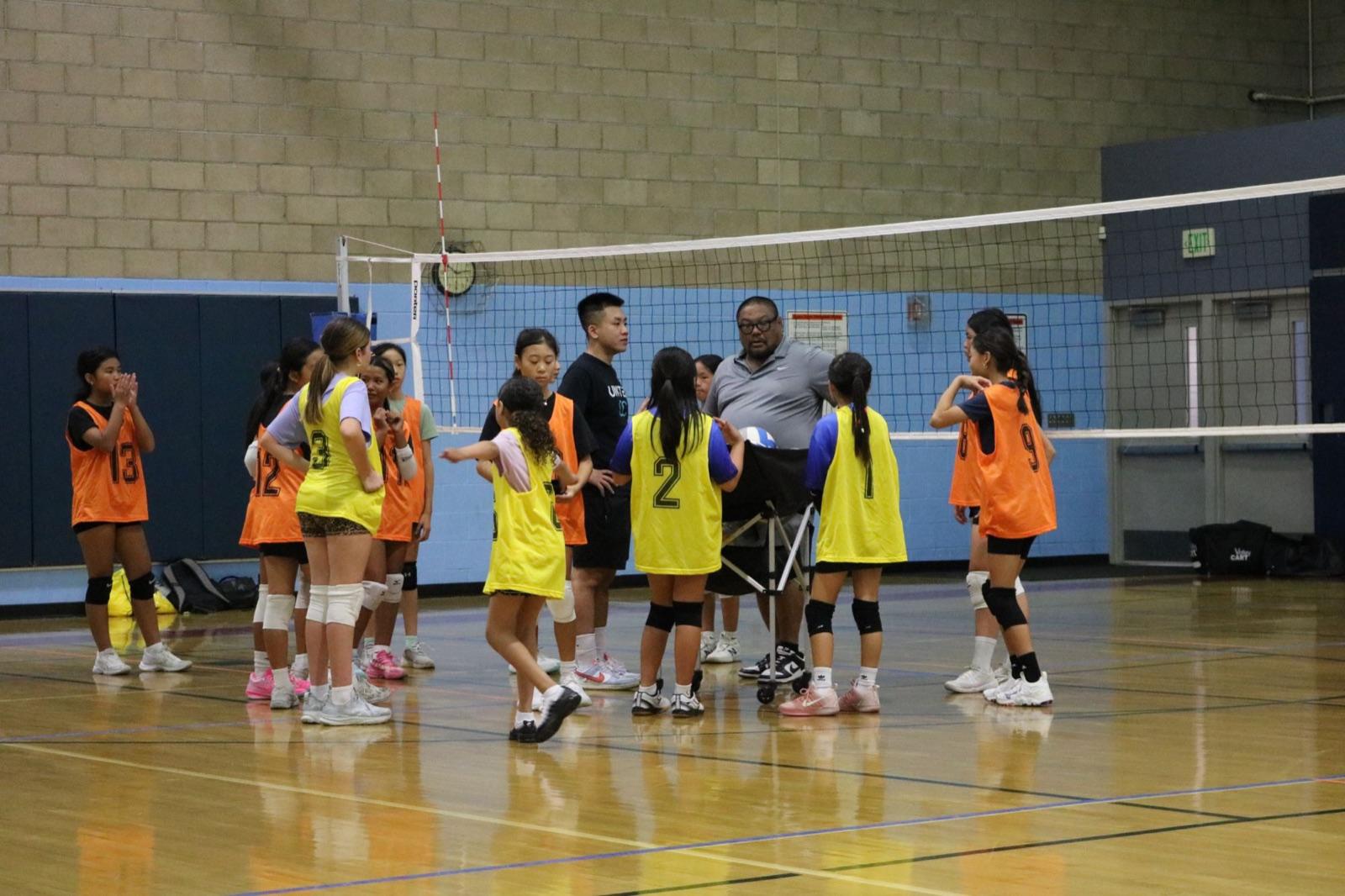
The first session she'll be nervous and probably wiped out by the end. Somewhere around the fourth she'll have a friend or two, and her passes will start going up instead of sideways.
Don't measure it by games. Young players spend most of their time on ball control because a rally can't happen until the ball goes where you want it. We'll get them playing in small groups as soon as they can keep it alive. The scrimmages are earned, and the kids feel that.
Bring court shoes, knee pads and a water bottle. Get there about ten minutes early to check in. We have the balls.
What you can do at home
Not much is needed. Toss a ball to her and let her pass it back. Ten minutes in the driveway, a couple of times a week, does more than you'd think. If the ball goes everywhere, good. That's how it starts.
The other thing is harder for most parents. Let the coach own the technique. If she comes home with a new word like "platform" and wants to show you, let her teach it to you. Kids who get to be the expert at home tend to pay closer attention on Saturday.
The longer road
If she sticks with it for a year or two, there's a path from here into club volleyball, and the age groups on that side follow USA Volleyball's age chart. There's no rush. Plenty of strong players didn't touch a club team until middle school.
For now the goal is small. Get her on a court most weekends and keep her wanting to come back.
If you're not sure which session fits, write to us through the contact page and tell us her grade and what she's done so far. We'll point you at the right one.
Train with us
Weekend clinics, camps, club teams and private training across Orange County, ages 8 to 18.
Find a program