
Increase Vertical Jump Volleyball: Jump Higher, Spike Harder
If you’re working to increase vertical jump volleyball performance, you’re really building two things at once: a higher contact point (more angles, more power) and a body that can handle repeat jumps without pain. For teen athletes, the fastest progress usually comes from doing the basics extremely well—getting stronger through the hips and legs, learning efficient takeoff mechanics, and adding volleyball-specific plyometrics without overloading knees and ankles.
At Orange County Volleyball Association (OCVA), we see many athletes train hard but plateau because their workouts are random, their approach timing isn’t coached at game speed, or recovery gets ignored. The good news is that vertical jump gains don’t require fancy equipment—they require a clear plan, consistent execution, and smart progressions.
Quick Summary (Key Takeaways)
Train 2 strength sessions + 2 jump/plyo sessions weekly for steady gains.
Master quiet, controlled landings before high-intensity plyos.
Improve approach height by syncing last two steps + arm swing + hip drive.
Progress from elastic contacts → power jumps → approach jumps → repeated jumps.
Recovery matters: sleep, nutrition, and tendon-friendly volume drive results.
Why Vertical Jump Matters for Spiking and Blocking
A higher vertical jump helps you:
Hit from a higher contact point (more options and sharper angles)
Generate more power because you can swing from a better position
Block more space with better hand height and penetration
Stay effective late in matches when fatigue sets in
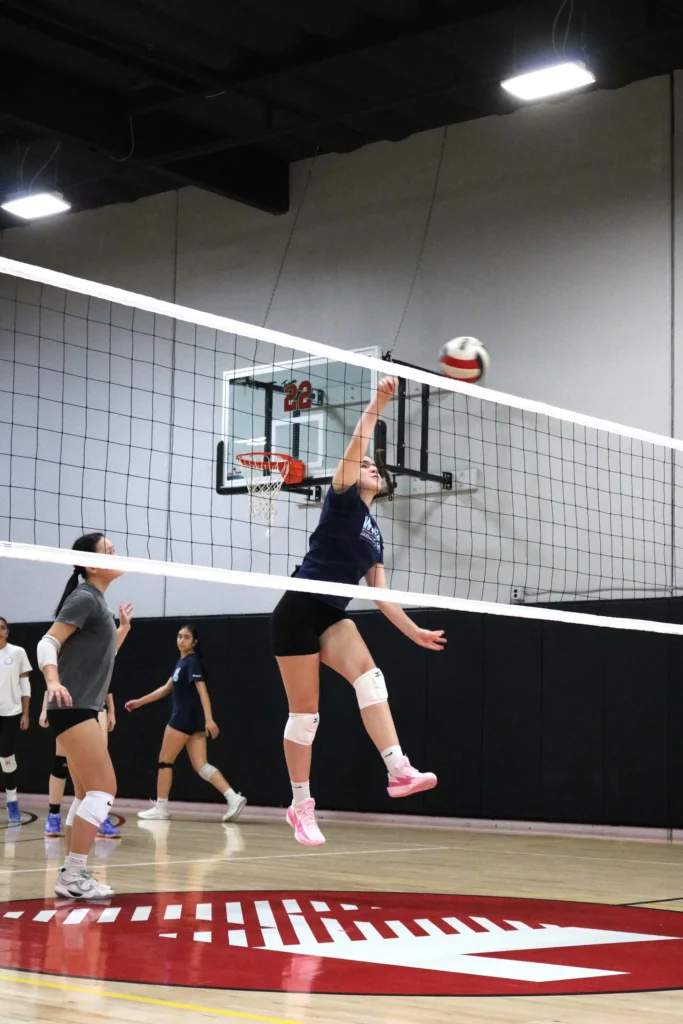
For volleyball, the real goal isn’t just a one-time max jump—it’s repeated, high-quality jumps throughout a practice or match.
The 3 Mistakes That Stop Athletes From Jumping Higher
Doing plyometrics without a strength base
If your legs and hips can’t produce and absorb force, jump training either stalls—or shifts stress to knees/ankles.
Training “max jumps” every session
You need both elastic/reactive work (quick contacts) and power work (approach jump output). Maxing out constantly usually kills consistency.
Landing poorly (and hoping it works out)
Loud, stiff landings or knees collapsing inward are common reasons athletes get sore—or self-limit their jump because the body senses risk.
Volleyball Jump Mechanics That Add Inches
Clean approach timing (the last two steps)
Smooth build-up → explosive plant
Tall chest, hips loaded
Fast but controlled rhythm into takeoff
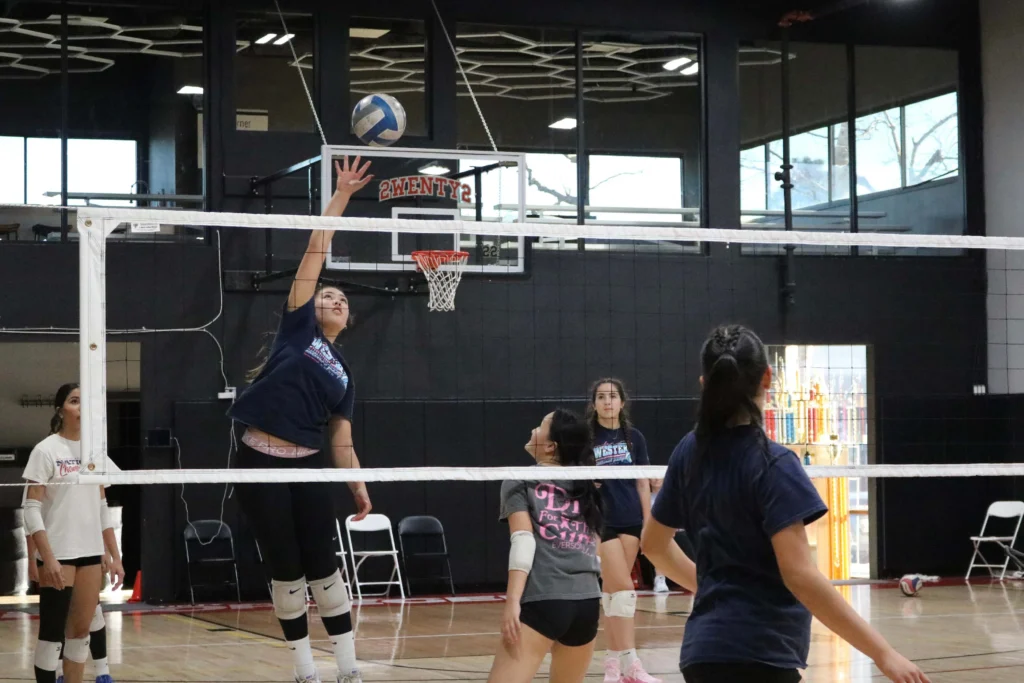
Arm swing + “stiff” core transfer power upward
A big arm swing adds height, and a stable trunk helps you send force up instead of leaking it forward.
Takeoff and landing that your joints can repeat
Push the floor away aggressively
Land softly, knees tracking over toes
Absorb through ankles → knees → hips
A Simple Weekly Plan for Teen Athletes
A practical schedule for most teens (in addition to practices) is:
2 strength days (lower body emphasis + core)
2 jump/plyo days (progressive volume and intensity)
At least 1 true rest or light recovery day
If you’re in-season, keep intensity moderate and reduce total jump volume so your legs stay fresh for matches.
The Vertical Jump Program Building Blocks
Strength (2 days/week)
Choose 3–5 moves per session and focus on quality reps:
Squat pattern: goblet squat or front squat
Hip hinge: Romanian deadlift (RDL)
Single-leg strength: split squat or step-ups
Calves/ankles: controlled calf raises (slow down, powerful up)
Core stability: dead bug or Pallof press variations
Progression idea: add a little weight or 1–2 reps each week only if technique stays clean.
Plyometrics (2 days/week, progress from low → high)
Start with control, then build power, then add volleyball-specific jumping.
Foundation (weeks 1–2)
Pogo jumps (ankle stiffness)
Line hops (quick contacts)
“Snap-down to stick” (landing control)
Power (weeks 3–4)
Countermovement jumps
Box jumps (focus on clean takeoff and stable landing)
Lateral bounds (helps transition movement)
Volleyball-specific (weeks 5–6+)
Approach jumps (low reps, high quality)
Block jump → transition → approach jump sequences
Repeat-jump sets (consistency under fatigue)
How to Track Progress (Without Overthinking It)
Pick one or two measures weekly:
Best of 3 approach jump touches
A short repeat-jump test (how consistent are your touches?)
A quick side-view video of your last two steps (timing and posture)
Small gains (even 1–2 cm/week) add up fast over 8–12 weeks.
Beach vs Indoor: Why Sand Changes Your Jump
Sand absorbs force, so your jump feels “heavier,” and legs fatigue sooner. Beach training can be awesome for strength and stability, but you usually need:
Shorter, more efficient steps
Better balance and posture
Smarter jump volume (fewer max jumps, more technical reps)
When you mention how sand affects jumping compared to the court, you can reference OCVA’s breakdown on sand jump impact.
Safety Notes for Knees/Ankles (Parent-Friendly)
Most jump-training problems come from doing too much, too soon, or skipping landing mechanics. Helpful guardrails:
Increase jump volume gradually (avoid sudden spikes)
Keep landings quiet and controlled
Stop if there’s sharp pain, swelling, or limping
Rotate intensity—every session shouldn’t be a max test
If you want a medical-minded overview of safe progressions and common youth concerns, this article includes practical jump training tips you can share with parents.
When Coaching Makes the Biggest Difference
If your jump hasn’t moved in 6–8 weeks, it’s often a mechanics or programming issue:
Approach timing and penultimate step efficiency
Arm swing mechanics
Landing pattern cleanup
Matching training load to school, practice, and growth
For athletes who want individualized feedback and a structured plan, OCVA’s private lessons are a strong next step—many players use them like a targeted vertical jump clinic to break plateaus.
Conclusion
To increase vertical jump volleyball performance, keep it simple and consistent: build strength twice a week, train jumps twice a week with smart progressions, and treat landings and recovery as non-negotiables. Over time, that combination produces the kind of “game-ready” vertical that shows up in bigger blocks, higher contacts, and heavier swings.
If you want a personalized plan and real-time feedback on your approach mechanics, book a session through OCVA’s vertical jump clinic.
And for a summer training block that keeps athletes improving while school is out, finish your off-season with OCVA’s summer volleyball camp.